TRX deposits from a phone: the send screen and the mistakes it invites
A phone is where most small TRX deposits are sent, and the send screen is built for speed. Speed is what makes the four mistakes below easy.
They apply to any wallet and any operator.
Why does the Max button cost small senders money?
Because it fills in the entire balance, leaving nothing for the network charge. A wallet that handles it well subtracts the charge first. One that does not will fail the send or, on Tron, burn coins in a way that leaves the receiver short of the floor. Typing an amount a few coins under the balance is the habit that avoids both.
How do you avoid sending to a stale address?
Copy the address from the cashier on the day, not from a chat or a note. Cloudbet's own settings describe a Tron address as starting with T or S and running to 34 characters, so a pasted string of a different shape is a warning. Compare the first and last characters on both screens.
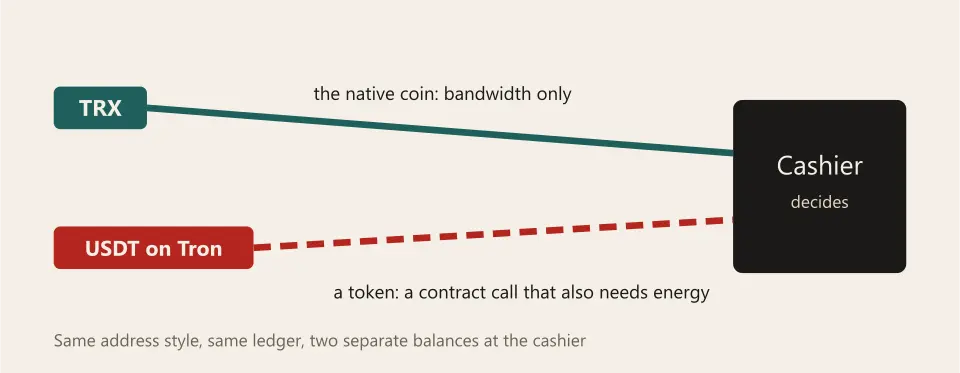
What if two tokens look alike in the wallet?
A phone wallet lists TRX and USDT on Tron side by side, with the same address, and the cashier may take only one of them. Duelbits' table, for one, names Tron for TRX and shows USDT on other networks. Pick the token from the cashier's own label and check the contract field if the wallet shows one.
Is a mobile deposit treated differently by the operator?
Nothing we read says so: no page we read sets a different floor, network or address rule by device. The cashier decides the same way whatever sends. More is in the phone page.
Short answers for phone senders
Does scanning a QR code protect a small TRX transfer any better?
It is as good if the first and last characters match the cashier's. It is no better than a copy.
Should I send a small test first?
Yes, above the floor. A test below it is the loss the floor describes.
Do wallets warn about the wrong network?
Not reliably, since Tron addresses look the same for TRX and for tokens.